Tharu Culture
A living, breathing culture — expressed through dance, ink, silver, and the ancient recipes of the Terai.
Sacred Dances
Tharu dances are living archives — each performance a historical document recording cosmology, struggle, and ecological memory.
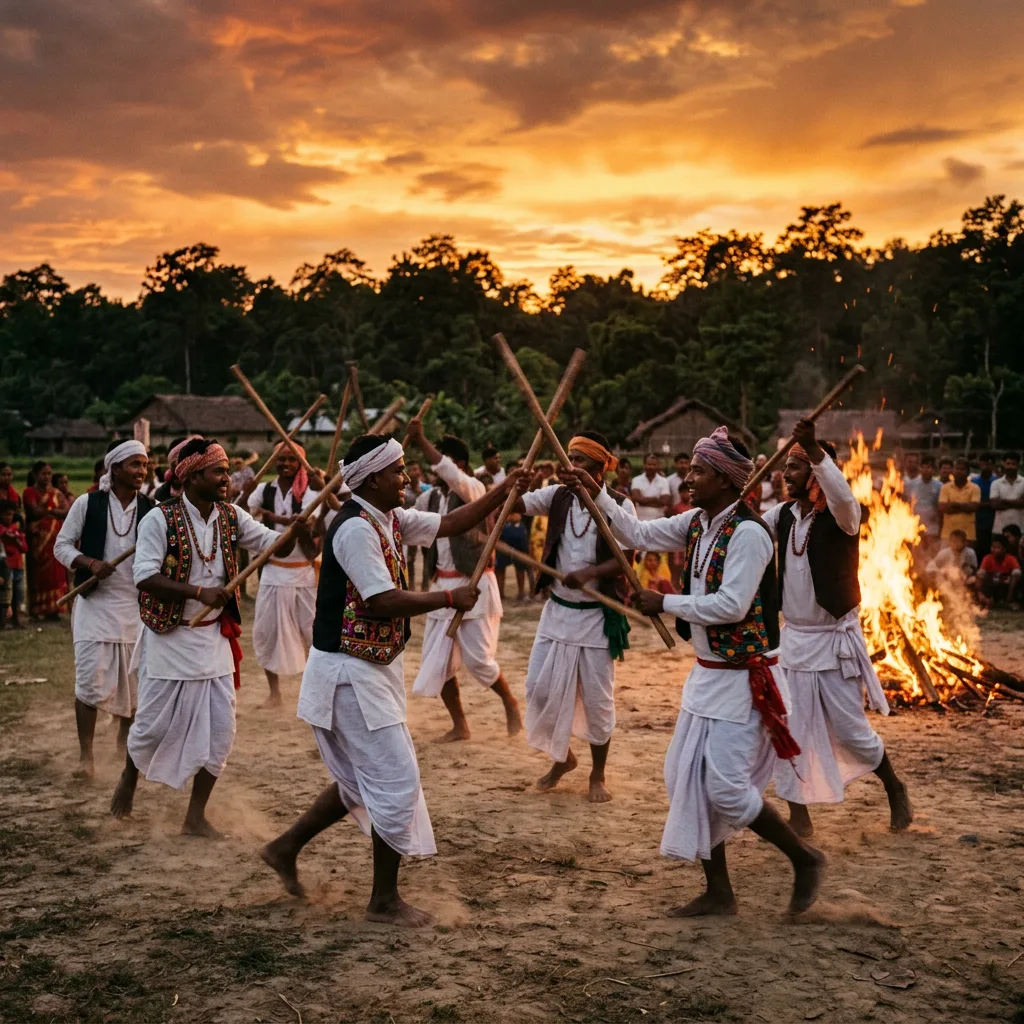
Lathi Nach
Stick Dance
The most globally recognized Tharu performance. Men and women strike wooden sticks in complex, synchronized rhythms accelerating to a climax. Originally performed during Dashain to honour Goddess Durga — symbolizing the community's unity and their need to defend crops from jungle wildlife.
Sakhiya Nach
Women's Ceremonial Dance
Performed from Dashain to Tihar by unmarried youth. Women in white skirts and red blouses dance gracefully with cymbals while men beat the madal. Starting at the Badghar's courtyard, it serves simultaneously as a harvest prayer, ancestral lament, and structured courtship.
Jhumra
Communal Group Dance
Performed even at houses of mourning to restore communal equilibrium. Jhumra songs are deeply subversive — articulating the collective trauma of Kamaiya bonded labor, transforming suffering into cultural expression.
Mayur Naach
Peacock Dance
Dancers mimic the sweeping, elegant movements of the peacock — symbolizing the onset of rain, fertility, and reverence for jungle wildlife. A deeply spiritual performance connecting the community to the natural world.
Ago Naach
Fire Dance
Men dance barefoot over burning flames — an awe-inspiring display of spiritual courage, purification, and the protective power of forest deities. One of the most dramatic and powerful Tharu performances.
Sorathi
Epic Love Dance
Recounts epic stories of love and heroism through graceful, flowing patterns. A narrative dance preserving the oral literature and romantic legends of the Tharu people across generations.