Our Heritage
The Tharu are the original Children of the Earth — indigenous to the Terai for over a millennium, with a story as rich as the Chitwan jungle itself.
Who Are the Tharu?
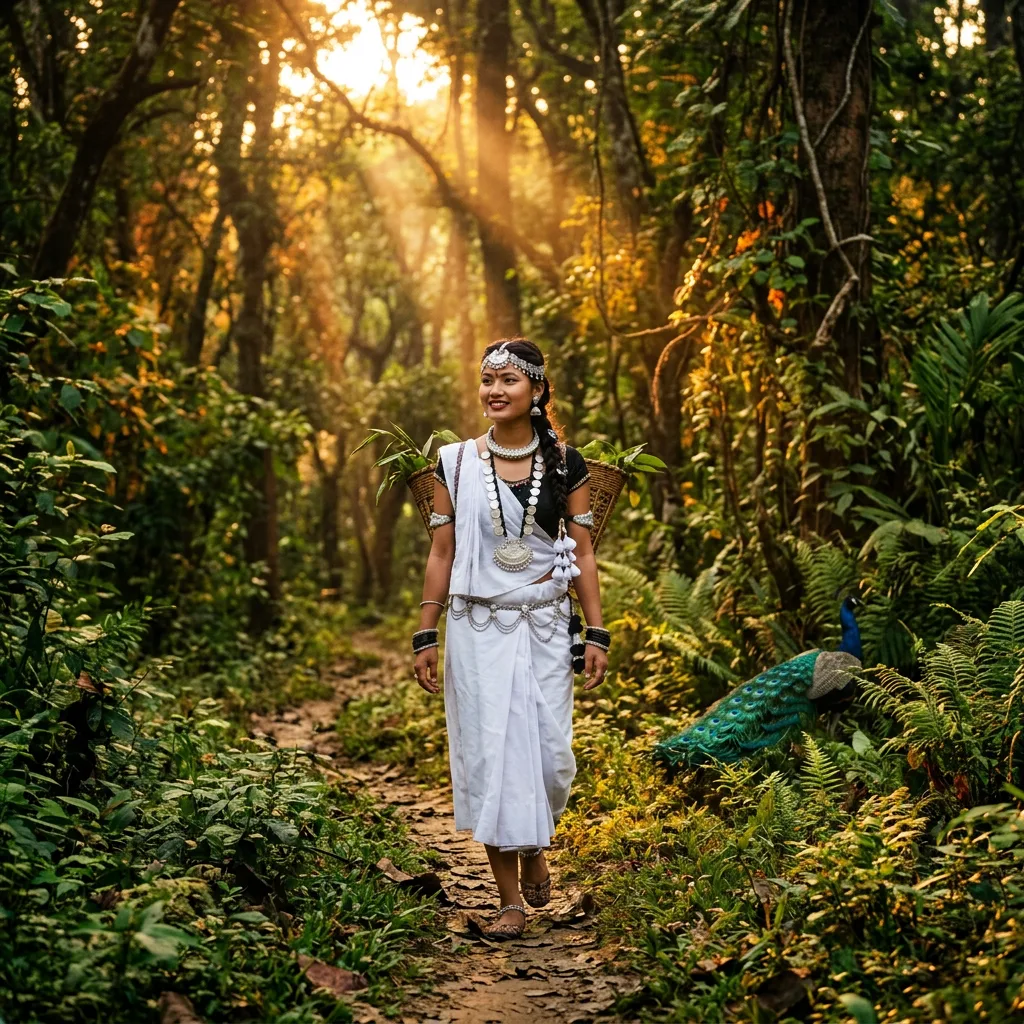
The Tharu people — numbering over 1.7 million in Nepal — are one of South Asia's most ancient indigenous populations. They call themselves Dhartiputra: Children of the Earth.
For centuries, the Tharu inhabited the dense, malarial Terai plains that others considered uninhabitable. Through a remarkable biological adaptation — a genetic prevalence of thalassemia — the Tharu developed near-immunity to malaria, allowing them to build rich, self-sufficient civilizations in the forest.
Their name itself carries mystery. Some scholars trace it to Sthavir (followers of Theravada Buddhism), others to the Tibetan phrase meaning "country at the border," and still others to their role as the original settlers of the Terai land.
Tharu Subgroups
The Tharu are not monolithic — they are a constellation of distinct communities unified by shared heritage across the Terai belt.
Chitwaniya Tharu
Chitwan, Nawalparasi
Our roots — indigenous to the Rapti River basin, deeply integrated with Chitwan National Park's ecosystem.
Rana Tharu
Kailali, Kanchanpur
Far-western Tharu with claimed Rajput heritage — renowned for vibrant red & white embroidered textiles.
Dangaura Tharu
Dang, Bardiya
Rich tradition of folk epics (Barkimar) — heavily impacted by the Kamaiya bonded labor system.
Kochila Tharu
Morang, Sunsari
Eastern Tharu with cultural influences from neighboring Maithili and Bhojpuri communities.
Historical Timeline
Origins
The Tharu establish themselves as the first peoples of the Terai plains — the dense malarial jungles that others dare not enter.
Buddha's Kin
Tharu tradition holds that many are descendants of the Shakya clan — the royal lineage of Siddhartha Gautama, Prince of Lumbini.
Rajput Migration
The Rana Tharu subgroup traces their lineage to Rajput nobility who fled into the Terai following Mughal expansion into northern India.
Malaria Eradication
DDT programs open the Terai to outside settlers. The Tharu lose vast ancestral lands through systematic dispossession and bonded labor (Kamaiya).
Chitwan National Park
Establishment of Royal Chitwan National Park displaces 20,000+ Tharu from ancestral forest lands in the name of conservation.
Kamaiya Liberation
Nepal formally abolishes the Kamaiya bonded labor system, freeing thousands of Tharu families from generational servitude.
Federal Recognition
Nepal's new constitution recognizes indigenous rights, marking new possibilities for Tharu political and cultural self-determination.
Diaspora & Renewal
Tharu communities around the world, including Victoria, Australia, carry and celebrate this heritage into a new era.